When most antique enthusiasts hear the term “carnival glass,” their minds instantly drift to heavy marigold pitchers, ruffled amethyst bowls, or pressed. However, there is an entirely different, highly fashionable side to this story: carnival glass beads.
Characterized by a shimmering, metallic, oil-slick iridescence, these wearable treasures occupy a fascinating intersection of European cottage industry, Art Deco high fashion, and American celebratory culture.
Here is the captivating history of how carnival glass moved from the furnaces of Europe into the jewelry boxes of the modern world.
The Secret in the Metallic Shimmer
To understand the beads, we must first understand the glass itself. Developed in the United States around 1908 by the Fenton Art Glass Company, iridescent glass was initially launched as a luxury item. It was designed to mimic the high-end, hand-blown art glass of luxury makers like Tiffany and Steuben.
To achieve this magical look, artisans pressed molten glass into distinct molds. While the glass was still red-hot, they sprayed it with a specialized mixture of metallic salts and chemical compounds. When exposed to heat, these minerals bonded with the glass surface, leaving behind a permanent, shimmering, light-refracting luster.
Because it didn’t quite capture the luxury market’s interest, the excess inventory was eventually sold cheaply to regional carnivals, midways, and funfairs. There, they were given away as game prizes—hence the enduring name “carnival glass”.
The Bohemian Connection: Bringing Iridescence to Fashion
While American factories focused heavily on functional tableware, master glassmakers in Bohemia (modern-day Czech Republic) looked at this spectacular iridescent finish and saw an opportunity for fashion accessories.
Centered primarily in the mountainous Gablonz region, bead-making was largely a traditional cottage industry. Whole families worked in small, overheated home workshops to press-mold hot glass rods into tiny trinkets, hatpins, buttons, and individual beads.
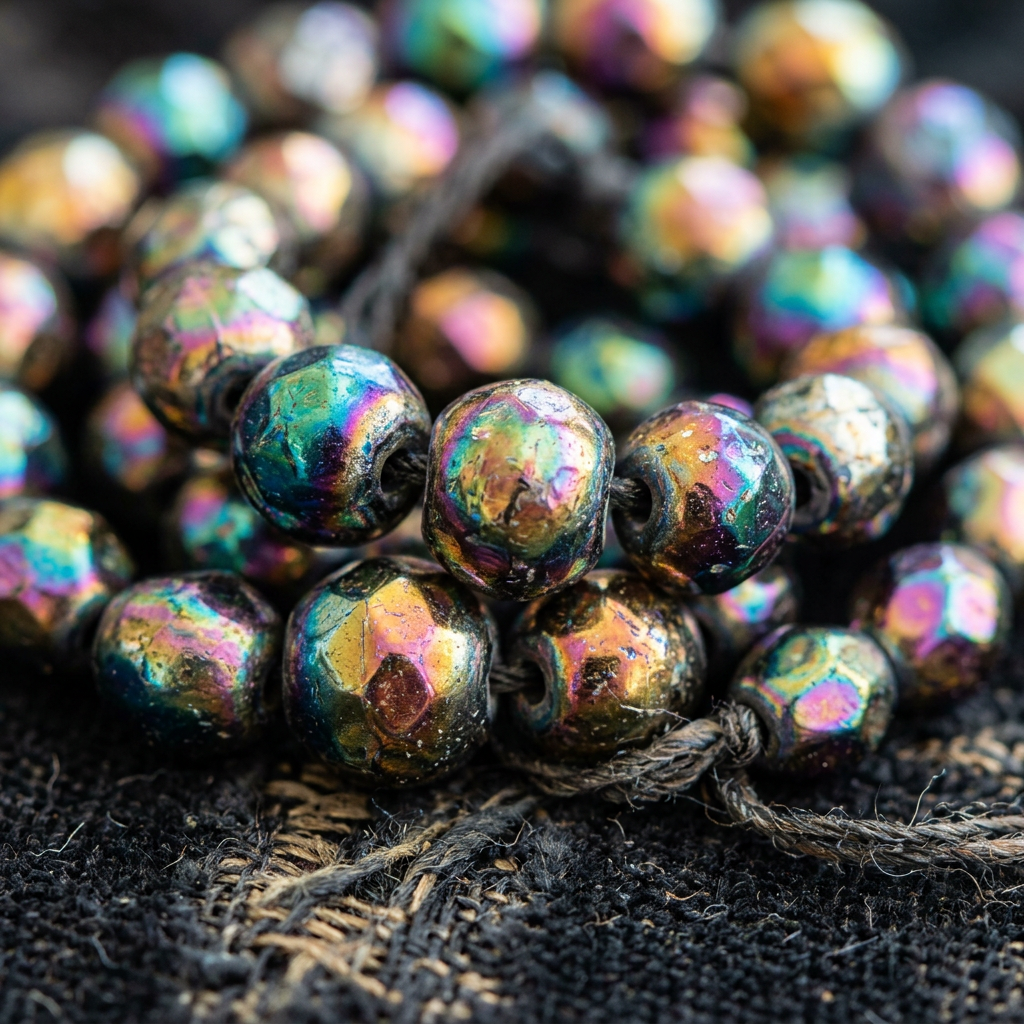
The Bohemians successfully applied the same metallic vapor techniques to their glass beads, creating the very first wearable carnival glass. These beads quickly became a massive global export, coveted by Western fashion houses for their dramatic weight, rich saturation, and distinct “oil-slick” glow.
The Evolution of Carnival Colors

True antique and vintage carnival glass beads are celebrated for their rich, deeply saturated base colors. When hunting for authentic pieces, collectors generally look for three distinct base tones hidden beneath the surface sheen:
- Marigold: The most ubiquitous and iconic carnival color. It features a clear or amber glass base treated to reflect a bright, fiery orange-gold iridescent finish.
- Amethyst / Black Amethyst: A deeply saturated purple glass base. Under normal lighting, it looks nearly black, but when held to the light, it reveals brilliant flashes of purple, teal, and magenta.
- Cobalt Blue: A rich blue base that creates a brilliant, electric sheen resembling a peacock feather when struck by light.
A Tale of Two Carnivals: The Mardi Gras Connection
No history of carnival beads is complete without mentioning New Orleans Mardi Gras, where the literal “Carnival” holiday gave these glass baubles a legendary second life.
In the late 1800s and early 1900s, parade groups (known as Krewes) began a tradition of throwing small gifts to crowds lining the streets. By the 1920s, the Krewe of Rexpopularized tossing hand-strung, heavy glass beads imported directly from Bohemia.
Because purple, green, and gold were the official colors of Mardi Gras—representing justice, faith, and power—Bohemian glassworks manufactured millions of iridescent carnival beads specifically to match this palette. These early glass “throws” were prized souvenirs, kept as family heirlooms long before cheap, mass-produced plastic took over the parades in the late 20th century.
Leave a Reply